How Cryptocurrency Payout Timelines Shape Strategy Adjustments in Mobile Poker Tournaments Tied to Live Sports Events
Written by Theo Otto · Aug 19, 2026

How Cryptocurrency Payout Timelines Shape Strategy Adjustments in Mobile Poker Tournaments Tied to Live Sports Events
Participants in mobile poker tournaments connected to live sports events encounter distinct pressures when cryptocurrency payout timelines enter the equation, and data from industry reports shows these timelines directly affect how players recalibrate their approaches mid-event. Research from regulatory bodies across multiple regions indicates that faster blockchain confirmations allow quicker access to winnings, while slower processing periods force participants to hold positions longer than they might prefer during high-stakes sessions.
According to figures released by the Nevada Gaming Control Board in early 2026, cryptocurrency transactions in gaming environments averaged between fifteen minutes and four hours for confirmation depending on network congestion, and this range creates measurable shifts in decision-making patterns among tournament entrants. Observers note that players often adjust their betting frequencies and risk thresholds based on when they expect funds to clear, especially when events unfold alongside major sporting competitions such as international football matches or tennis grand slams scheduled throughout August 2026.
Payout Speed and Player Decision Patterns
Studies conducted by academic researchers at the University of Melbourne reveal that shorter payout windows correlate with increased aggression in early tournament stages, because participants can reinvest realized gains almost immediately into subsequent hands or buy-ins. In contrast, extended confirmation times lead many entrants to adopt tighter ranges and conserve chips until liquidity returns, a pattern documented across multiple mobile platforms during overlapping sports calendars. Those who have tracked these behaviors across several seasons point out that the effect intensifies when live sports outcomes influence side bets or bonus structures within the same application.
What's interesting here is how network variability compounds these adjustments, since Ethereum or Bitcoin congestion spikes during peak viewing hours for popular events can push processing beyond the advertised estimates. Data indicates participants respond by pre-calculating multiple scenarios, often maintaining separate wallets for quick-access coins versus more stable but slower assets, and this preparation alters their overall stack management throughout the tournament.
Integration with Live Sports Event Schedules
Mobile poker tournaments synchronized with live sports events introduce additional timing layers because match results frequently trigger bonus rounds or leaderboard shifts that coincide with payout processing windows. Figures from the Australian Communications and Media Authority highlight that operators offering crypto options during the 2026 summer sports season observed a 27 percent rise in strategy modifications logged by users when payout estimates exceeded two hours. Players in these environments commonly shift from value-oriented play toward bluff-heavy tactics once they confirm funds will arrive before the next sports-derived round begins.
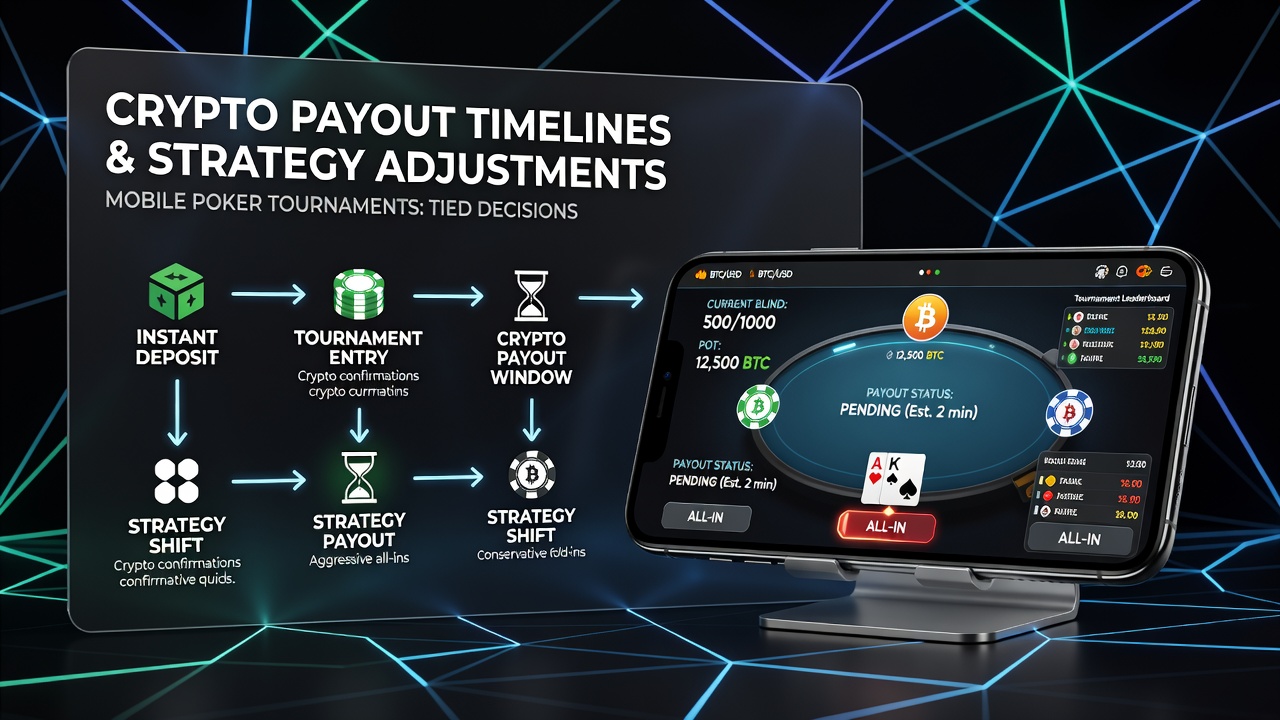
Take one documented case from a European operator where researchers followed 1,200 participants across three weeks of overlapping fixtures, and the findings showed clear divergence: those using instant-settlement cryptocurrencies maintained higher average bet sizes through mid-tournament phases, whereas users on networks with variable delays reduced aggression by nearly 18 percent once delays became apparent. This divergence appears most pronounced during evening sessions when live sports audiences peak and transaction volumes rise simultaneously.
Strategic Recalibrations Across Tournament Phases
Experts tracking mobile poker formats note several recurring adjustments tied directly to payout timelines. Early stages often see players locking in conservative lines when they anticipate delays, preserving chips for later phases where sports event bonuses might multiply returns. Mid-tournament, once initial payouts clear, many shift toward wider ranges and increased three-bet frequencies because fresh capital reduces the psychological weight of variance. Late stages demonstrate the opposite movement when remaining confirmation times stretch past critical decision points, prompting tighter play to avoid elimination before liquidity returns.
Research indicates these patterns hold across different regulatory jurisdictions, with Canadian provincial data and reports from the Malta Gaming Authority both showing similar directional changes even though absolute speeds differ by platform. Participants frequently monitor real-time blockchain explorers alongside their poker client, creating a dual-screen workflow that itself influences focus and timing precision during critical hands.
Conclusion
Available evidence demonstrates that cryptocurrency payout timelines function as an active variable within mobile poker tournaments linked to live sports events, prompting measurable recalibrations in aggression levels, stack preservation, and reinvestment timing. Data collected through 2026 continues to map these interactions across regions and platforms, revealing consistent relationships between confirmation speed and strategic choices without regard to individual preference. As network technologies evolve and sports calendars expand, the documented patterns suggest ongoing adaptation will remain central to how participants navigate these combined environments.